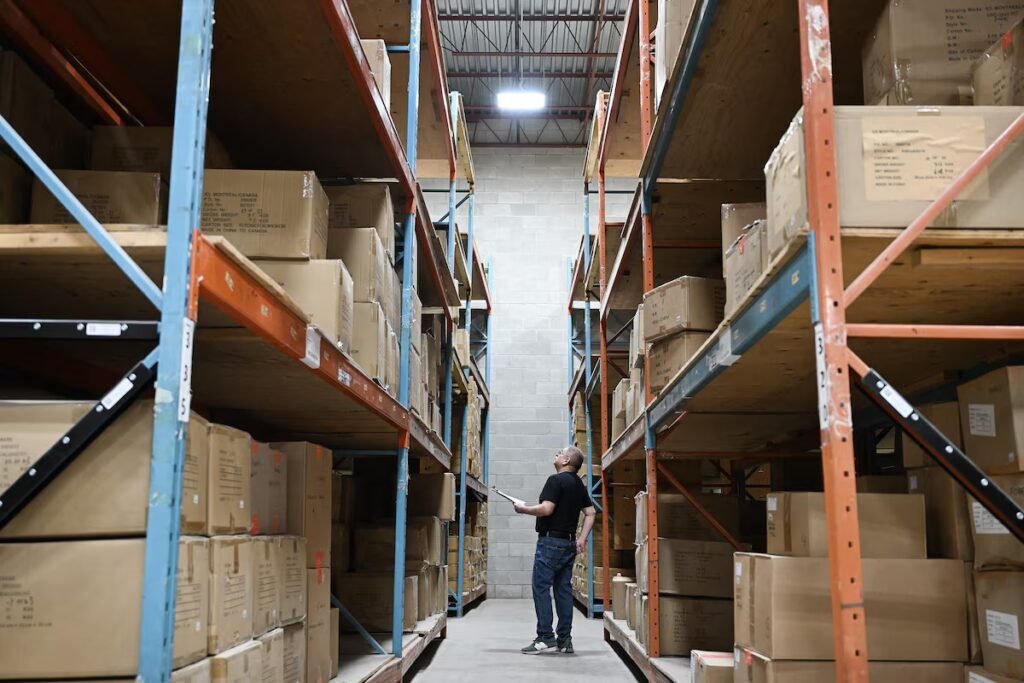

If the 50-per-cent tariffs are introduced after Wednesday’s midnight deadline, they would affect 5 per cent of Canada’s exports to the United States.Graham Hughes/The Globe and Mail
Tariff collection for some Canadian businesses has started well ahead of a U.S. deadline to slap new levies on about US$20-billion worth of domestic goods on Wednesday.
As early as last Sunday, Chris Bell, a small-business owner from Cape Breton Island, N.S., faced duties as high as $17.74 on a shipment valued at $25, or $75.49 to send items worth $100 to customers in the United States. That’s while Canadian negotiators worked to hammer out a deal with Washington this week that would dodge the latest round of American levies.
While tariffs are a tax on imports, businesses shipping with a courier can often take on the U.S. duties and fees themselves, rather than their customers being charged.
For Ms. Bell, $50 of the $75.49 duty was listed under the same Section 338 tariffs that have been the subject of heated talks between Ottawa and Washington. Another 10-per-cent charge was added because of the forced labour levies that the U.S. administration introduced in July. She also would have had to pay an additional “general rate” amounting to $5.
The duties were calculated by Zonos, a third-party software used by Canada Post to collect and remit duties directly to U.S. Customs and Border Protection.
Explainer: What Trump’s new tariffs would mean for Canada’s economy
“I would be making less than what I paid for my materials,” said Ms. Bell, who didn’t end up sending any packages of her jewellery this week to customers in the U.S. “I would have to cancel all my orders.”
According to information shared by Canada Post with the Canadian Federation of Independent Business, if shipments are expected to arrive on or after Aug. 19, the new 50-per-cent tariff rate would apply even if the shipment was initiated before the date.
International trade regulations often allow for goods that are already in transit when new regulations take effect to be governed by the rules that were in place the day the goods left the country of export, said Joy Nott, a partner at KPMG Canada’s trade and customs practice.
But, she said, “in the most recent proclamation imposing the Section 338 tariffs, there is no leeway given for goods in transit.”
That’s why even with hours left before the new tariffs come into effect at 12:01 a.m. on Wednesday, some Canadian businesses may already be paying the price. And it’s unclear whether they’ll get their money back if negotiations are successful.
U.S. President Donald Trump invoked the latest round of levies directed at Canada using a Depression-era Tariff Act that allows the White House to penalize countries for discriminating against American products.
First announced in July, the President said the tariffs were in response to Canada curbing imports of U.S. autos, alcohol and dairy.
“Canada has been very, very tough on us over the years,” Mr. Trump said during a press event last month. “No other president’s done anything about it.”
The U.S. government cannot charge the tariff until it’s active; the duties are remitted by Zonos. However, “if a carrier or customs broker clears the package through customs before the tariff is in play, they would be required to refund the shipper,” Ms. Nott said.
Canada Post did not respond to a request for comment on the policy or how refunds would be made.
“I get that Canada Post has rules to follow,” said Dan Kelly, president and chief executive officer at the Canadian Federation of Independent Business. “But this looks like they are working to help the U.S. government collect tariffs even in advance of the final negotiations.”
Opinion: Will Canadians’ deference to Mark Carney survive this trade war?
If the 50-per-cent tariffs are introduced after Wednesday’s midnight deadline, they would affect 5 per cent of Canada’s exports to the United States. The impact of those tariffs would amount to 0.4 to 0.6 per cent of GDP, according to estimates from Royal Bank of Canada and Capital Economics, respectively, pushing Canada’s already weak GDP growth back toward zero.
The tariffs would be especially damaging to certain pockets of the economy, hurting roughly 20 per cent of production and jobs in industries such as apparel and electrical equipment, RBC found.
Ms. Bell, who used to send about 80 to 85 per cent of her jewellery to American customers, has already been pummelled by an intermittent volley of levies ranging from 10 to 35 per cent in the last year.
But the new charges, if introduced, will likely be the final straw when it comes to shipping to the U.S., she said. “It’s not worth it.”


More Stories
No country for retail investors: Are your ETFs a great product – or are you the product?
Carney’s first-ever project of national interest, Stelco cites tariffs for layoffs and finance executives bet on prediction markets: Must-read business and investing stories for the week of October 3
Behind the rise of Canada’s lengthy ‘Frankenstein’s monster’ tax code