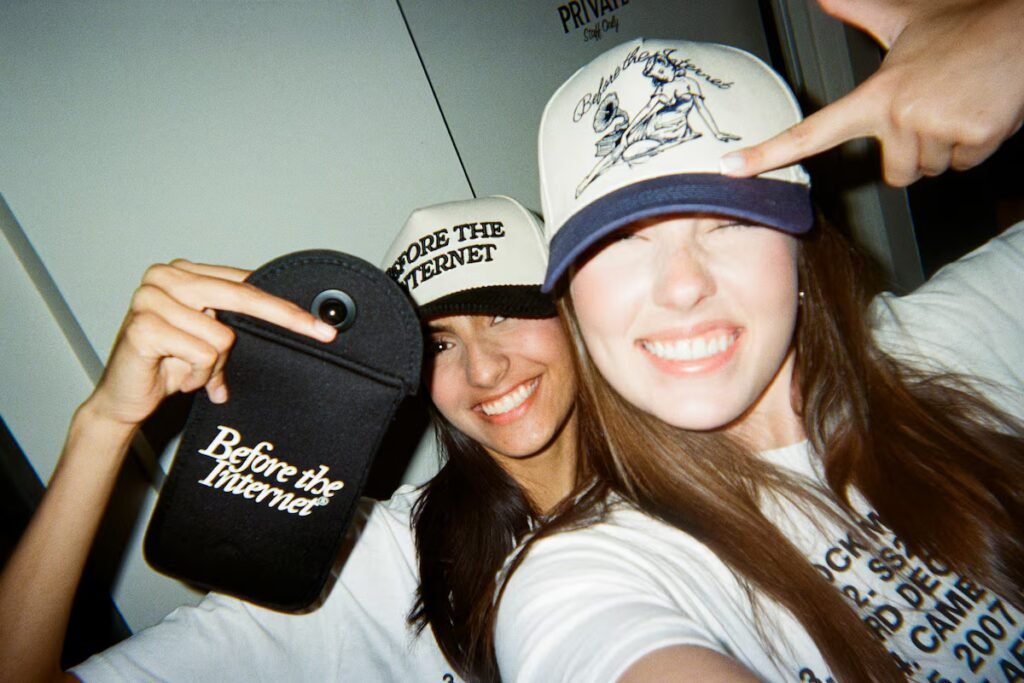

Guests at a phone-free, pre-release listening party for Charli XCX’s new album pose with a Before the Internet pouch that attendees put their phones in.Before the internet/Supplied
At some Toronto events, cellphones have only one job – to get guests through the door.
After scanning their tickets, guests place their devices inside lockable pouches that either restrict access to their phones or prevent them from recording the event. Long associated with nightlife in European cities such as Berlin, the practice is gaining traction in North America among Gen Z and millennials looking for a different kind of nightlife experience.
In June, American singer-songwriter Phoebe Bridgers announced that her 2026 arena world tour, including stops in Toronto and Vancouver, would be entirely phone-free. Guests at Bridgers’ shows will be required to place their phones, smartwatches and related accessories in Yondr pouches, lockable fabric bags that have become a popular way to enforce phone-free spaces. Guests will keep their devices but will be able to access them only in designated areas of the venue. The announcement followed a series of surprise acoustic pop-up shows across the United States where Bridgers performed new material for crowds who were unable to record any of it.
According to data from Eventbrite, the number of phone-free experiences rose 567 per cent internationally between 2024 and 2025. Attendance increased 121 per cent. In a separate survey, 49 per cent of Gen Z and millennials said they wanted live experiences to feel more authentic and less curated. The ticketing platform linked the appeal of going screen-free to young adults’ desire for more spontaneous experiences and a broader turn toward analog activities.
Guests of certain concerts and performances are asked to place their phone in pouches such as these.Before the internet/Supplied
In Toronto, an event company called Before the Internet has turned the desire to disconnect into a business, supporting events such as an official listening party for Charli XCX’s latest album prior to its release.
Max Ward founded the company in 2025 with his brother, Mich Ward, and their friend, Christian Williamson. After hosting its own events across Canada and the United States, such as an après-ski-themed event at Toronto bar Paris Texas, Before the Internet began providing phone-free services for other organizers.
They have two types of lockable pouches depending on the size of the event. For crowds with less than 250 people, the pouch is opaque on both sides, and guests must visit an unlocking station to access their phones. At larger events, one side of the pouch is semi-transparent, allowing guests to use their devices while keeping the cameras covered. If a guest needs their device for medical reasons, exemptions are provided.
Regardless of the format, Ward said the shared restriction changes how people interact with one another.
“Everyone seemingly has to agree to the newfound social contract of the event, and seems to really enjoy themselves,” said Ward.
Ward said the events often attract a Gen Z audience looking for something different from traditional nightlife. He attributes some of the appeal to worries around social media and the possibility of being recorded or posted online. Phone-free events, he said, help people feel less self-conscious. The biggest difference he has observed is the ways people interact with each other without having a phone as a buffer. He’s seen people become more comfortable in the space, allowing them to dance or spark conversation with a stranger.
“I think that’s how music and nightlife were designed to be enjoyed, not what you see at Coachella, where it’s literally just a sea of screens,” explained Ward.
An attendee of the phone-free listening party puts her phone in a Before the Internet pouch.Before the internet/Supplied
Sebastian Argamsilla, a Gen Z attendee at several of Before the Internet’s events, said that while the phone-free approach has been refreshing, it’s also challenged some of his habits around phone use.
“It’s really eye-opening. There were many times that I reached for my phone and realized I can’t use it,” he said, recalling thinking, “I’m going to have to make conversation with someone or find something else to do instead.”
For performers, the shift is visible from up on stage. Gina Shim, who performs under the stage name DJ Shimmy G, is a Canadian DJ based in Germany. She has played major events, including Lollapalooza Berlin, but says she prefers performing in phone-free spaces. While she’s been to many phone free spaces in Germany, she is seeing the trend reach Canada. She’s done multiple sets at Complex19, a queer-owned, phone-free Toronto nightclub that opened its doors in May.
Shim explained that promoting a sense of safety is especially important in queer spaces, where freedom from recording allows guests to express themselves without worrying that the moment will appear online.
“I think that magic only happens when there’s no phones there,” Shim said. “It’s really important to have these spaces for people to just feel free and really safe to be themselves.” While some performers may be concerned about how a lack of social media posts about their events may impact their outreach, DJ Shimmy G has found success through word of mouth.
The desire for tech-free experiences isn’t just confined to nightlife. According to Narrative Research, nearly four in ten Canadians are trying to reduce their screen time. Products such as dumbphones, which are largely limited to calling and texting, and Brick, a physical device that blocks selected smartphone apps, have emerged to meet that appetite for less screen time. Ward is also looking to expand beyond nightlife, recently launching DisConnect, an app that similarly promises to help “people spend less time on their phones and more time living.”
Ward thinks screen time reduction apps and phone-free nightlife experiences are a response to people’s desire to feel more present and to protect their privacy.
“I think it ultimately just kind of boils down to a fatigue with the way things have been,” said Ward. “People want to feel like they’re truly experiencing something.”


More Stories
Actor Rodrigo Fernandez-Stoll finally dealt with his stress – on a new TV show
How apps are helping seniors age in place with dignity and independence
More reasons to ditch ultraprocessed foods