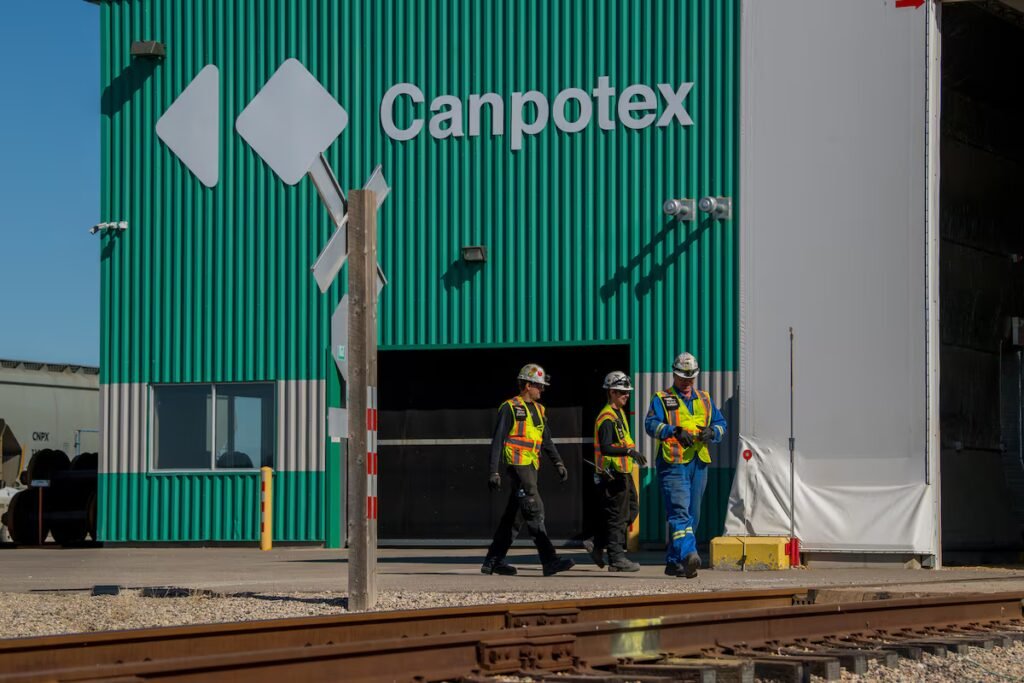

Mechanics at the Canpotex Railcar Maintenance Facility near Guernsey, Sask., in September, 2020. Improvements to the company’s Port of Vancouver terminal will replace ship loaders, conveyors and the dumper pit used to unload railcars and load vessels.Liam Richards/The Globe and Mail
Potash giant Canpotex Ltd. is embarking on a $500-million upgrade of its terminal at the Port of Vancouver, aiming to boost exports amid strong global demand for fertilizer.
The project will improve terminal infrastructure, replacing ship loaders, conveyors and the dumper pit used to unload railcars and load vessels, according to Canpotex. Construction is expected to finish in 2028.
The investment is expected to help Canpotex tap often-unused capacity from the terminal, which in most years reaches about eight million tonnes of exports. After the investment, the company will be able to regularly move 11 million tonnes of the critical fertilizer annually from its Neptune Bulk Terminals in North Vancouver to overseas markets.
It is the largest supply chain investment in the company’s history, and marks another move by the potash exporter and marketer to stay competitive in what has been – and promises to continue to be – a volatile time for the critical mineral.
“This investment in Neptune strengthens the critical Vancouver trade corridor from the Prairies to the Pacific and the infrastructure that connects Saskatchewan potash to farmers around the world,” Gordon McKenzie, Canpotex chief executive officer, said in a statement to The Globe and Mail.
Potash, a salt fertilizer essential to major agricultural production internationally, is the nation’s fifth largest export. And Canada is the world’s top supplier of the commodity.
U.S. in talks to buy potash from Belarus at lower cost than what Canada charges, Trump says
Canpotex – a joint venture between Saskatoon-based mining giant Nutrien Ltd. NTR-T and Tampa-based The Mosaic Company – is the country’s top overseas marketer of potash. The company ships 15 million tonnes annually to more than 40 countries via bulk export terminals in the Port of Vancouver, Portland, Oregon, Saint John, New Brunswick.
But Canpotex’s global market share and the price of potash will be contested when a mega project from the world’s largest mining company comes online next year.
In mid-2027, Melbourne-based BHP’s more than $18-billion Jansen project, 140 kilometres east of Saskatoon, will start pumping 4.15-million metric tonnes into the global marketplace annually. In mid-2031 the second stage is forecast to be complete, increasing total production to 8.5-million tonnes per year – approximately 10 per cent of current global supply.
It will be the most significant market signal for potash trade in recent years, said Joshua Mayfield, an analyst for Hallgarten & Co.
While farmer demand for potash is climbing in tandem with demand for food, the volume Jansen will bring into the marketplace is likely to have an impact on global prices. Long standing fertilizer majors with older infrastructure – such as Canpotex’s joint shareholders Nutrien and Mosaic – will need to invest to keep costs down, especially if they hope to be competitive in emerging agricultural economies.
Canpotex has invested heavily in markets in Asia since it was first established in the 1970s. But it has been unable to shake Belarussian and Russian dominance in these marketplaces, Mr. Mayfield said. Potash mined in Eastern Europe is cheaper, and easier to transport to Asian markets.
In the spring of 2025, Nutrien announced that it would be investing up to $1-billion in a new export terminal on the Pacific Northwest. Late last year, it announced that it had selected a preferred site at the Port of Longview, Wash., raising concerns about Canadian investment in the U.S. while the countries remain engaged in a trade war.
Ottawa is pressing Nutrien to change course on building a potash export terminal in the U.S.
Investments that keep potash producers agile will be needed should they hope to break into Latin American countries like Brazil and Argentina, Mr. Mayfield said, adding these markets are hungry to diversity fertilizer supply given the resource’s exposure to geopolitical turmoil.
Potash prices first skyrocketed in 2022 after Russia invaded Ukraine, and prices for nitrogen and phosphate also hit record highs this year after the U.S. war with Iran shut down the Strait of Hormuz – through which one-third of global fertilizer supply normally travels.
Canpotex is positioning itself to be able to meet this uncertainty with stable, long-term supply, Mr. McKenzie said.
“Canadian potash is a world-class resource, and it needs a world-class supply chain behind it.”


More Stories
China, U.S. agree to establish AI safety channel after summit
BlackBerry signs automotive software deal, Canada Labour Code changes and West Coast pipeline project in focus: Must-read business and investing stories for the week of Sept. 26
Anand to give Canada’s UN speech this afternoon – National